

এখানে Direct Narration কে indirect এ রুপান্তর করার নিয়মগুলো খুব সহজভাবে উপস্থাপন করা হয়েছে। খুব সহজে tense সম্পর্কে বেশি ধারনা না রেখেও কিভাবে narration change করা যায় সে বিষয়ে গুরুত্ব দেওয়া হয়েছে।
শিক্ষার্থীদের প্রথমে নিচের ৩টি টেবিল সম্পর্কে ভাল ধারনা রাখতে হবে।
Table -1:
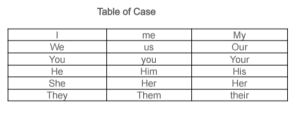
Table-2:
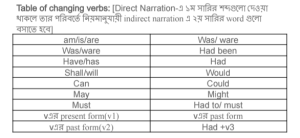
Table -3:
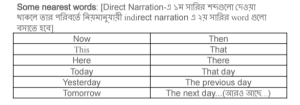
[Note:
*RS এর 1st person, RV এর subject দ্বারা; এবং RS এর 2nd person, RV এর object দ্বারা পরি বর্তি ত হবে ।*RS-এ 3rd person এর কোনো পরিবর্তন হবেনা। Case এর টেবিল অনযুায়ী RS এর 1st person ও 2nd person, RV এর subject ও object এর pronoun দ্বারা পরিবর্তিত হবে ।
*** RV এ যদি say, says, shall/Will say থাকে তাহলে indirect করার সময়, RS -এ Verb পরি বর্তন করতে হবেনা, শুধু person, nearest words পরি বর্তন করলেই চলবে ।]
i) RV অপরিবর্তিত অবস্থায় প্রথমে লিখতে হবে।
ii) কমা উঠে that বসবে।
iii) নির্দিষ্ট নিয়মে case, nearest word, verb ইত্যাদি পরিবর্তন করতে হবে।
Example:
(a) He said to me, “My father works in Dhaka”.
Ans. He said to me that his father worked in Dhaka.
ব্যাখ্যা: He said to me [ i) নং অনুযায়ী] that [ ii) অনুযায়ী, কমা উঠে] his [my, 1st person তাই he (RV এর subject দ্বারা পরিবর্তিত হয়) ] father worked [verb এর টেবিল অনুযায়ী v এর present form থাকলে past form…] in Dhaka [Dhaka, 3rd person তাই অপরিবর্তিত ].
(b) Teacher said to me, “You must listen to my lecture”.
Ans. Teacher said to me that I had to listen to his lecture.
i) RV এর said to হতে কমা পর্যন্ত অংশ উঠে যায়। সেই স্থানে prayed/wished বসে।
ii) কমা উঠে that বসে।
iii) প্রথমে subject এবং তারপর might বসে।
iv) V এর পরিবর্তন হবে না।
v) বাকি ক্ষেত্রে সাধারন নিয়ম গুলো প্রযোজ্য।
Example:
(a) I said to him, “May you live long”.
Ans. I prayed that he might live long.
(b) Raka said to me, “Good morning”.
Ans. Raka wished me good morning.
i) প্রদত্ত দ্বারা আনন্দ বোঝালে said to এর স্থলে exclaimed with joy, দুঃখ বোঝালে exclaimed with sorrow, বিস্ময় বোঝালে exclaimed with wonder, লজ্জা/ঘৃনা বোঝালে exclaimed with shy/shame, ক্ষোভ বোঝালে exclaimed with grief বসে।
ii) কমা উঠে that বসে।
iii) Oh, Alas, Hurrah, Fie, Bravo, Wow থাকলে উঠে যায়।
iv) Subject এবং verb পরে দেওয়া থাকলে তা আগে লিখতে হয়।
v) what/how এর পরিবর্তে article এর পরে very/great বসে।
Example:
(a) He said, “Alas! I am undone.”
Ans. He exclaimed with sorrow that he was undone.
(b) He said, “What a nice day it is!”
Ans. He exclaimed with joy that it was a very nice day.
i) said to এর স্থলে asked বসে
ii) প্রদত্ত speech টি Aux. V ( যেমন- am/is/are/was/were…) দ্বারা শুরু হলে কমা উঠে if বসে। W/H word (what/how/which/when…) দ্বারা শুরু হলে প্রদত্ত W/H word টি ই লিখতে হয়।
iii) প্রথমে subject তারপর verb বসে।
Example:
(a) I said to him ,”Are you reading now?”
Ans. I asked him if he was reading then.
(b) He said to me, “Why have you called me on?”
Ans. He asked me why I had called him on.
i) প্রদত্ত speech দ্বারা আদেশ বোঝালে said to এর স্থলে ordered, উপদেশ বোঝালে advised, অনুরোধ বোঝালে requested, নিষেধ বোঝালে forbid বসে।
ii) কমা উঠে to বসে।
iii) Negative sentence এর ক্ষেত্রে “do not” থাকলে তা উঠে যায়।
iv) V এর পরিবর্তন হবে না।
Example:
(a) Father said to her, “Learn your lesson regularly”.
Ans. Father ordered her to learn her lesson regularly.
(b) He said to me, “Don’t go there”.
Ans. He forbid me to go there.
i) said to এর স্থলে proposed বসে।
ii) কমা উঠে that বসে।
iii) Let উঠে যায় এবং তার পরিবর্তে subject এরপর should/might বসে।
iv) V এর পরিবর্তন হয় না।
Example:
(a) He said, “Let me go there once again”.
Ans. He proposed that he should go there once again.
(b) They said, “Let’s move on”.
Ans. They proposed that they should move on.
i) প্রদত্ত passage টি ভালোভাবে পড়ে subject এবং object অর্থাৎ বক্তা এবং শ্রোতা শনাক্ত করতে হবে।
ii) একই ব্যক্তির উক্তি repeat ( পুনরাবৃত্তি) হলে দ্বিতীয় sentence কে ১ম sentence-এর সাথে প্রয়োজনমত and said , and also said, and added, and asked, and also prayed ইত্যাদি দ্বারা যুক্ত করতে হয়।
iii) প্রদত্ত speech এ “yes” থাকলে তার পরিবর্তে said এর স্থলে agreed/ replied in the affirmative এবং “No” এর পরিবর্তে “disagreed/ replied in the negative” বসে।
iv) প্রদত্ত Sentence গুলোকে passage আকারে Assertive sentence এ লিখতে হয়।
Example:
“What are you doing now, Jack?” I said. “I am watching an interesting programme on TV.” “Aren’t you wasting your time?” I said. “No, I don’t think so,” he said.
Ans. I asked Jack what he was doing then. Jack said/ replied that he was watching an interesting programme on TV. I again asked him if he was not wasting his time. He disagreed and said that he did not think so.

*V = Verb/ verb এর present form
*RV= Reported Verb বা, Inverted কমার বাইরের অংশ
*RS= Reported Speech বা Inverted কমার ভেতরের অংশ।
*V1 = verb এর base/present form
*V2= verb এর past form
*V3= Verb এর past participle form
✔️Telegram Study Groups:
🔸Official Group : https://t.me/ednoub17
🔸1st Year : https://t.me/ednoub1styear
🔸2nd Year : https://t.me/ednoub2ndyear
🔸3rd Year: https://t.me/ednoub3rdyear
🔸4th Year : https://t.me/ednoub4thyear
🔸Masters : https://t.me/mainenglishbd
🔸HSC : https://t.me/hscednoub









Helpful!
[…] Rules of Changing Narration in Bangla with Exercise (PDF & Text Version) | Direct to Indirect Sp… […]
[…] Rules of Changing Narration in Bangla with Exercise (PDF &Text Version) | Direct to Indirect Spe… […]